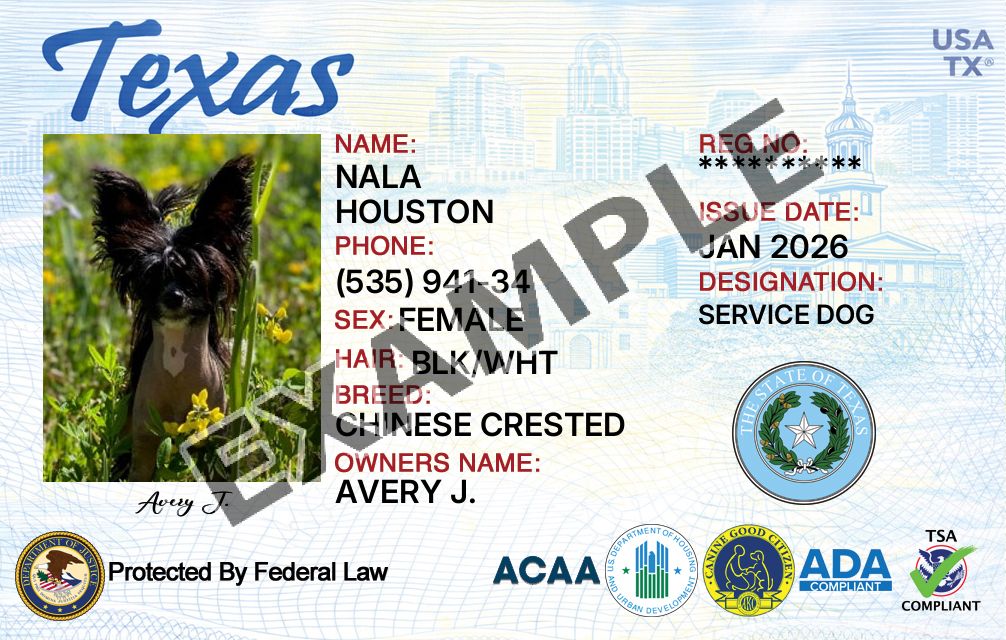
If you’re searching where do I register my dog in El Paso, Texas for my service dog or emotional support dog, the answer usually depends on where you live (inside El Paso city limits vs. unincorporated county areas) and what you mean by “register.”
In most cases, what people call “registering” is actually getting a dog license in El Paso, Texas (a local pet license tied to rabies vaccination and local animal ordinances). That local licensing process is separate from a dog’s status as a service dog under disability law, and separate again from rules for emotional support animals (ESAs).
Where to Register or License Your Dog in El Paso, Texas
Dog licensing and rabies enforcement are typically handled locally. Below are examples of official government offices that residents commonly contact for where to register a dog in El Paso, Texas, including animal control dog license El Paso questions, licensing steps, and rabies-related enforcement.
City licensing & animal services
El Paso Animal Services Center (City of El Paso)
County animal control (outside city limits)
El Paso County Sheriff’s Office — Animal Control Unit
Public health (rabies exposure & bite reporting support)
City of El Paso Department of Public Health — Epidemiology Program
Overview of Dog Licensing in El Paso, Texas
What a “dog license” usually means
A dog license in El Paso, Texas is typically a local license issued by the city (or sometimes handled through local channels such as participating veterinary offices). The purpose is to show that your dog meets baseline public health requirements—especially rabies vaccination—and to support local animal control and reunification if your pet is lost.
Licensing is local (city vs. county)
In Texas, pet licensing is most often handled by local government rather than the state. That’s why “where to register a dog in El Paso, Texas” can mean different offices depending on your address:
- Inside El Paso city limits: licensing and many animal services functions are commonly handled through the City’s animal services department.
- Outside city limits (unincorporated areas of El Paso County): animal control response and enforcement may involve county agencies (often through the sheriff’s office or other county animal welfare enforcement resources).
How Dog Licensing Works Locally in El Paso, Texas
Step-by-step: getting a local license
- Get your dog vaccinated for rabies by a veterinarian and keep the certificate/documentation.
- Confirm your jurisdiction (El Paso city limits vs. county/unincorporated area). This affects which office you contact for questions about the correct process.
- Submit required documents and pay the licensing fee to the local licensing authority.
- Keep proof of licensing available (and keep rabies vaccination current) to avoid compliance issues and to help with lost-pet returns.
Common documentation requirements
While requirements can vary, local licensing commonly depends on documentation such as a current rabies certificate and basic proof of identity/address. If you’re looking for animal control dog license El Paso help, the animal services office can tell you what they currently require.
Rabies vaccination requirements and enforcement
Rabies prevention is a core reason dog licensing exists. If your dog bites someone, public health protocols and local enforcement can require specific actions such as quarantine/observation procedures and documentation. Keeping rabies vaccinations current reduces risk to your household and helps you respond quickly if any incident occurs.
If you have a service dog or ESA, do you still need a license?
Often, yes. A service dog (or an emotional support animal) may still be subject to local public health rules like rabies vaccination and local licensing, even though the animal’s role and access rights are governed by separate laws. In other words: service dog status is not the same thing as “registration”, and it doesn’t automatically replace the local dog licensing process.
Service Dog Laws in El Paso, Texas
Service dog vs. pet license: two different things
A local pet license is about local compliance (especially rabies vaccination) and identification. A service dog, by contrast, is generally defined as a dog that is individually trained to do work or perform tasks for a person with a disability. The legal status comes from what the dog is trained to do and the handler’s disability-related need—not from paying for an online “registration.”
Do you have to “register” a service dog with the city?
Many handlers still choose (or are required by local pet ordinances) to keep their dog properly licensed and vaccinated. However, the concept of a mandatory, government-run “service dog registry” is commonly misunderstood. If you’re asking where do I register my dog in El Paso, Texas for my service dog, the most practical answer is:
- License the dog locally (city or county, based on your address).
- Maintain rabies vaccination records and other veterinary documentation.
- Focus on training and task performance that supports disability-related needs.
What you can be asked (and what helps in real life)
Even when a registry isn’t required, keeping organized records is helpful: rabies certificate, vaccination history, and any training documentation you maintain for your own use. This can reduce friction when interacting with housing providers, travel situations, or when replacing tags/licenses after a move.
Emotional Support Animal Rules in El Paso, Texas
ESAs are not the same as service dogs
An emotional support animal (ESA) generally provides comfort by its presence, but it is not the same as a service dog trained to perform disability-related tasks. Because of that difference, ESAs usually do not have the same public-access rights as service dogs.
Do ESAs need to be “registered”?
If you’re asking where do I register my dog in El Paso, Texas for my emotional support dog, it helps to break the issue into two tracks:
- Local pet licensing: you may still need a dog license in El Paso, Texas and rabies vaccination compliance (handled locally).
- Housing-related ESA documentation: ESA accommodations are typically handled through documentation processes with a housing provider (when applicable), not through a city “ESA registry.”
Best practice: keep local compliance simple
The safest approach is to treat your ESA like any other dog for local compliance: stay current on rabies vaccination, follow leash and nuisance rules, and obtain the appropriate local license for your address. If you’re unsure which office controls licensing for your neighborhood, start with the city animal services office and ask whether your address is served by city services or county services.